
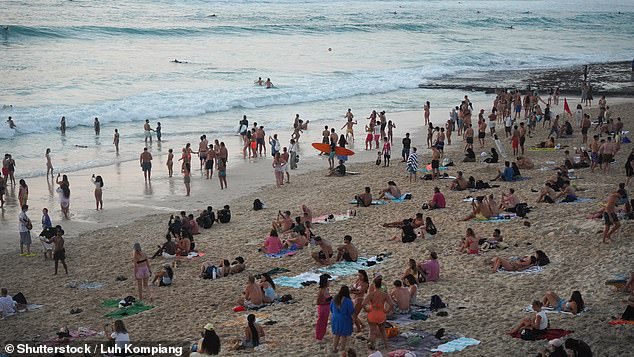
A former Bali resident has revealed the dark side expats rarely disclose after settling into what looked like ‘paradise from the outside.’
With its lush jungles, volcanic peaks, serene beaches and spiritual roots, Bali has long been glamourised as the ultimate destination for those in search of a wellness break.
Bali welcomed a staggering 16.4 million international and domestic visitors in 2024, and, as of 2025, is officially inhabited by 4.2 million residents.
But as the number of annual visitors continue to surge, along with the rapid growth of its expat community, some former residents say the reality of living on the island is much more complicated than the dream sold on social media.
Ainura Kalau, who lived for nine months in Canggu with her husband, shared her experience with VegOut, describing how frequent infrastructure problems, visa stress, pollution issues and fragmented connections were enough to drive the couple away.
Read on to discover eight downsides to Bali living shared by the former resident.
Visa renewal
According to Kalau, one of the first cracks in the dream appeared with the island’s ‘exhausting’ visa system.

As Bali’s annual visitor numbers continue to surge, former residents like Ainura Kalau say the reality of living on the island is much more complicated than it appears on social media

Kalau said the island’s visa system can become ‘exhausting’ as renewals have to be done every few months
She noted most people arrive on a tourist visa that needs extending every month or two.
Even with the help of an agent, or alternatively embarking on visa runs to Singapore and Kuala Lumpur every few months, the process of regularly handing over one’s passport becomes ‘another thing to plan around.’
She added: ‘The uncertainty gets to you. You’re never fully settled because you know your time is technically limited, even if you keep renewing. It’s hard to commit to anything long-term when your legal status feels temporary.’
Healthcare
While minor issues – such as a cold or a cut – are easily taken care of in expat hubs, Kalau warned more serious issues may require medical evacuation to Singapore or Bangkok.
Recounting a friend’s appendicitis scare, she revealed the local hospital ‘wasn’t equipped’ for the surgery she needed, which resulted in her insurance company arranging an emergency flight out.
She warned insurance covering such evacuations is ‘expensive’ – costs many younger expats try to avoid.
Pollution

Environmental issues are increasingly hard to ignore in Bali – from ‘serious’ trash problems to smoke caused by the burning of rubbish leading to health issues, according to Kalau
Despite Bali’s reputation for remarkable natural beauty, Kalau says environmental challenges are increasingly hard to ignore.
She wrote: ‘Bali has a serious trash problem. You’ll see it along the roadsides, in the rivers, washing up on certain beaches during rainy season.’
Residents also have to deal with locals burning their rubbish in the evenings, which creates billows of smoke that settles over densely populated areas and reportedly causes health issues.
According to Kalau, her husband dealt with ‘constant’ sinus issues, while she herself developed a ‘persistent’ cough, which became especially bad during the dry season in Canggu and Seminyak.
Living in a bubble
Though Canggu, Seminyak and Ubud have established themselves as hubs for remote workers and wellness seekers, these areas have also formed their own ‘weird’ bubbles that, in Kalau’s eyes, are far removed from the rest of Indonesia.
She claims that many cafés serve avocado toast and specialty coffee to customers who can get by without having to learn any Indonesian.
According to the former resident, the wealth gap is huge: the monthly rate to rent a villa is sometimes the average amount a local family lives on for ‘six months or more.’

Areas like Canggu and Ubud have formed their own ‘weird’ bubbles that, in Kalau’s eyes, are far removed from the rest of Indonesia
Fragmented friendships
While Bali is well-known for its social scene, including lively beach clubs and humbling wellness retreats, the constant turnover of residents often results in ‘surface-level’ connections.
Kalau wrote: ‘ Everyone’s transient. Someone you get close to leaves in a month. New people cycle in constantly, and you end up having the same introductory conversations over and over.’
She also noticed a competitive edge to many friendships in terms of who’s travelling to the ‘coolest places,’ or whose lifestyle looks most ‘enviable’ on social media, which she says eventually becomes ‘tiring.’

According to Kalau, the constant turnover of residents and tourists in Bali often results in ‘surface-level’ connections
Infrastructure
For many digital nomads and expats who rely on working remotely, Kalau warns Bali’s infrastructure can be a major obstacle.
She revealed power outages were a regular occurrence, which led to her and her husband paying for two different providers to avoid issues with the internet cutting out during important calls.
In addition, the couple had to deal with housing issues in their villa, such as mould issues, ‘inconsistent water pressure,’ slow responses from their landlord and after-effects of flooding brought on by heavy rain.

Bali’s infrastructure, Kalau says, can lead to mould issues, inconsistent water pressure, power outages and aftereffects of flooding brought on by heavy rain
Traffic congestion and the risks of travelling by scooter also added to daily stress – and costs.
The cost of living large
Despite Bali’s reputation for affordability, Kalau says most expats don’t want to live cheaply – which only adds to the spiralling costs of living comfortably – and safely – there.
She said: ‘You can live cheaply in Bali if you eat local food, rent in less touristy areas, and live like a local. But most expats don’t do that. They want the nice villa, the Western food options, the co-working spaces with good Wi-Fi.’
Once Kalau factored in visas, reliable health insurance, return tickets back home and generally higher prices in expat areas, she found her savings began ‘shrinking’ considerably.
She also claims there’s a ‘hidden cost’ in regularly having to replace items such as electronics and clothes, which both wear down easily as a result of humidity and mould.
Feeling stuck
The nail in the coffin for Kalau was the emotional toll of living between cultures and far from home.
Though she acknowledged she wasn’t a tourist, she also felt she wasn’t a ‘true resident.’
During their time in Bali, she noted the couple missed out on important events, from family gatherings to weddings to baby showers – experiences ‘you can’t get back.’
She concluded: ‘By month seven, I started feeling lonely in a way that had nothing to do with the number of people around me. I missed having roots somewhere. I missed being part of a community where I contributed something beyond tourist dollars.’
#dark #side #Bali #unveiled #resident #unequipped #hospitals #REAL #cost #living
